
Shutting a site down to get something blasted is almost never an option. The yard still has to load out, the trades still have their dates, the tenants still park where they park. So the blasting has to fit around the work rather than the other way round, and that is a planning problem as much as a blasting one.
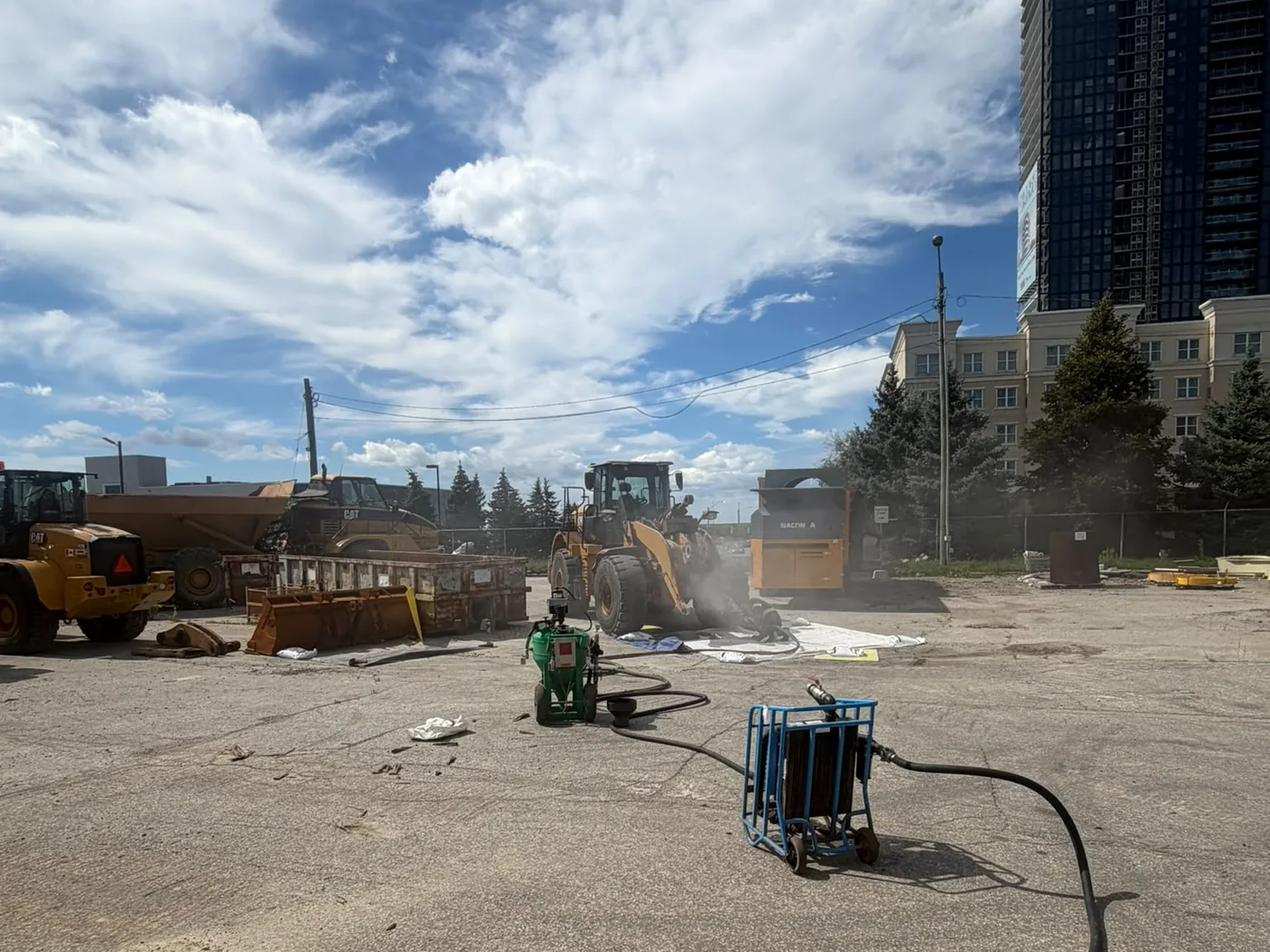
The photo is a contractor yard in the GTA with the loader being stripped mid-shift. Pot and water tank staged on the open pavement, hoses run to the work, tarps down under the machine, and a condo tower plus an apartment block directly over the fence line. Everything else in that yard kept moving while we worked.
What a live site actually changes
Where the rig goes. The pot, the compressor and the water need somewhere they will not block a lane or a loading door. We walk the site first and pick a spot that keeps the hose run short and the traffic route clear.
How much gets opened up at once. On an empty site you blast the whole thing. On a live one you work in sections, so the area under containment at any moment is small enough that everyone else can still get around it.
When the loud part happens. Early mornings, evenings and weekends exist for a reason. If the noisy or dusty stretch lands badly for the site, we move it rather than argue about it.
Containment is the whole game
Wet abrasive knocks the airborne dust down at the nozzle, which is what makes any of this workable with people nearby. We covered the method itself in dustless vs. traditional sandblasting. On a live site the method is only half of it. The other half is physical: tarps and ground sheets under the work so the spent media lands somewhere we can recover it, screens or hoarding on the exposure side, and masking on everything within range that is not getting blasted.
The things that get people in trouble are the ones nobody thinks about until there is a complaint. Parked cars downwind. Fresh air intakes and rooftop units. Open windows on the low floors of the building next door. Landscaping and new concrete. We walk those before the compressor starts, not after.
Water, power and access
Wet blasting needs water on site or trucked in, and it needs somewhere for the runoff to go. On a commercial property that often means containment and collection rather than letting it run to a catch basin, which is the same thinking we laid out in our pressure washing wastewater compliance guide. Our rig is self-contained for air, so we are not depending on your compressor, but a straight route in for the truck and a spot to park it is the difference between starting at seven and starting at nine.
Working around the other trades
Nobody wants the blasting crew to become the reason the painter or the welder is standing around. In practice that means sequencing the work so the surfaces come free in the order the next trade needs them, and being straight about how long a section really takes. If the coating crew is booked for Thursday, the steel has to be clean, dry and inhibited by Wednesday afternoon, not Thursday morning.
Cleanup is part of the job
Spent media, scale and old coating get collected and hauled out. A site that gets handed back with grit through the yard is a site that does not call again, and on a property with tenants or a public frontage it is a liability rather than an inconvenience. If the old coating is suspected lead or anything else regulated, that changes the containment and the disposal, and it needs to be flagged before anyone quotes it.
What we need from whoever runs the site
Four things get a realistic number and a realistic date: what is getting blasted and roughly how much of it, what is within about thirty feet that has to stay clean, when the site can and cannot have us there, and whether the existing coating is known or unknown. Photos of the area beat a description every time.
Common questions
Can you work while the site is operating?
That is the normal case for us, not the exception. We section the work, contain it, and schedule the disruptive parts around what the site has going on. Plenty of jobs get done early mornings or weekends for exactly that reason.
How do you keep dust off the building next door?
Wet abrasive at the nozzle, physical screening on the exposure side, masking on anything within range, and picking the working position with the wind in mind. We also walk the adjacent property first so intakes, windows and parked vehicles are dealt with before we start rather than after a phone call.
Who cleans up the spent media?
We do. Collection and removal are part of the quote. If the coating coming off is regulated, the disposal route changes and we tell you that up front.
Got steel, equipment, concrete or structure that needs blasting on a site that cannot go quiet, call (416) 930-1350 or send photos of the area through the quote form. We will tell you what it takes, what it costs, and when we can be there, straight.