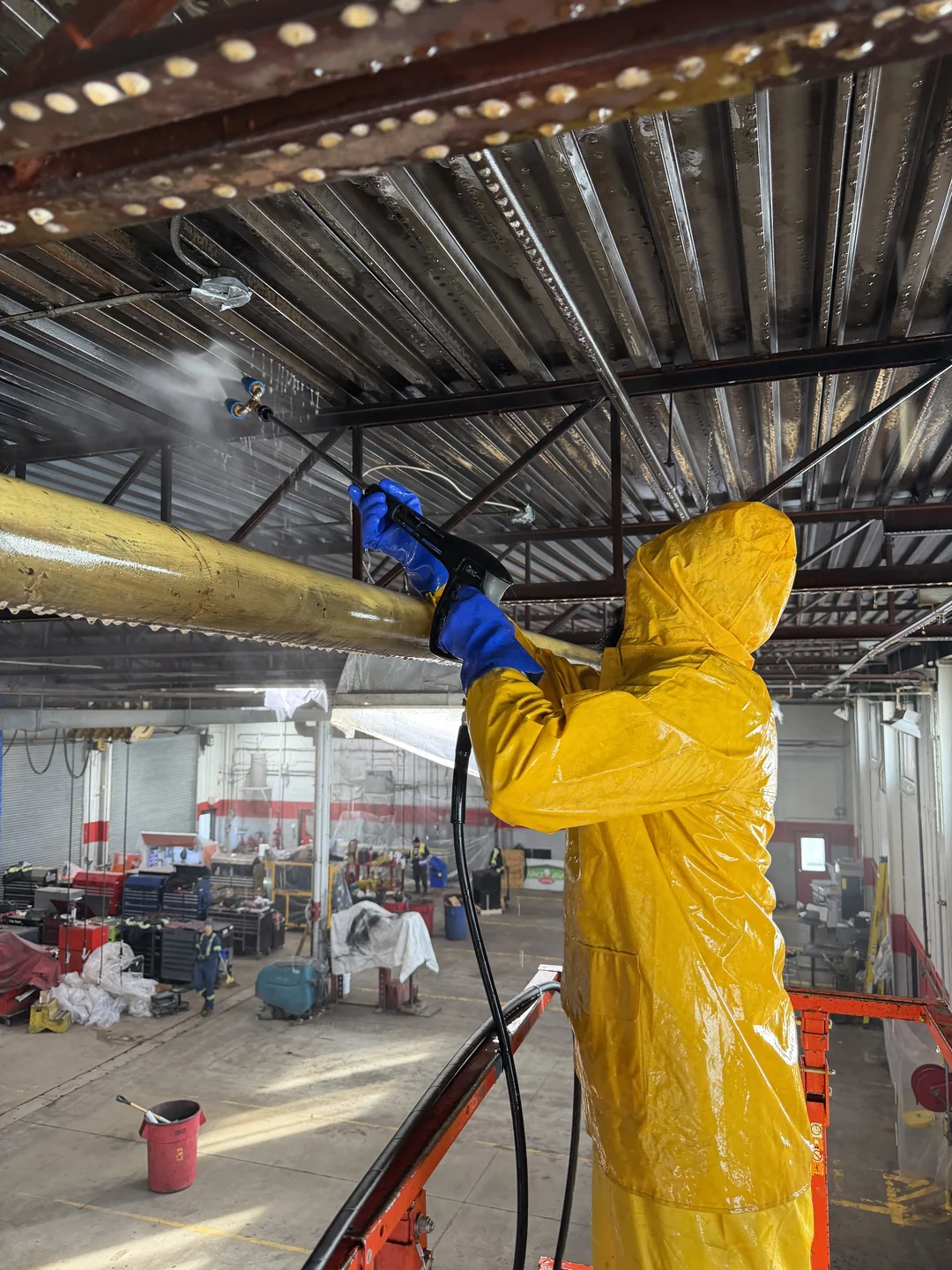
Blasting away industrial grease, oils and chemical spills creates wastewater that can't simply flow into municipal storm drains. That's a compliance risk many facilities overlook until it becomes a problem.
Why storm drains are the issue
Across the GTA, storm sewers generally discharge to local creeks and Lake Ontario with little or no treatment, which is why municipal sewer-use bylaws restrict what can enter them. Wash water carrying oil, fuel residue, heavy metals from coatings, or degreasers is exactly the kind of discharge those bylaws target, and enforcement typically lands on the property owner, not just the contractor holding the wand.
What compliant washing looks like
For commercial and industrial pressure washing, we use wastewater recovery and filtration systems to capture, contain and properly dispose of contaminated runoff. In practice that means berms and vacuum recovery at the drains, filtration appropriate to the contaminant, and disposal to the right stream, sanitary sewer where permitted, or licensed haul-away where it isn't. Combined with eco-friendly detergents and the correct PSI for each substrate, that keeps your property clean and onside with local environmental regulations.
Questions to ask any pressure washing contractor
- Where will the wash water go, and how will you keep it out of the storm drain?
- What recovery equipment is on the truck, and is it sized for this site?
- How is the recovered water filtered and disposed of?
- Are you insured for environmental damage, and can you show a COI?
If a contractor can't answer those cleanly, the discount isn't worth the liability. If your site handles oil, fuel or chemicals, ask about recovery before any wash, it's far cheaper than a runoff violation.