
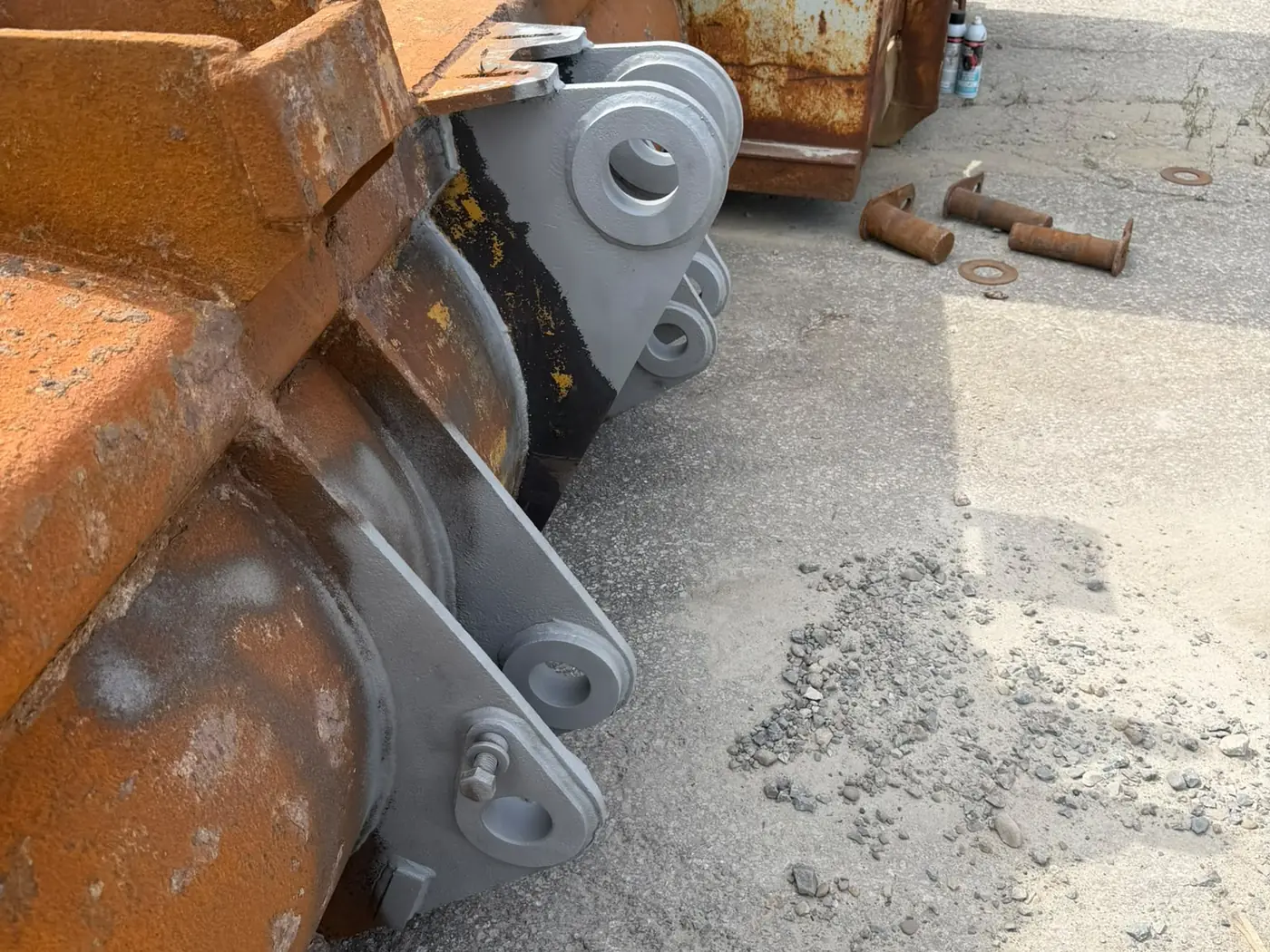
Heavy equipment rusts in the exact spots that matter. Pin lugs, bucket ears, quick coupler faces, the inside of a boom foot. Those are the surfaces that get inspected, welded, rebushed and repainted, and they are also the surfaces you cannot prep with a grinder without chewing into good steel. The photo above is from a job we did on a contractor yard in the GTA last week: a row of excavator buckets and loader attachments, pins pulled, lugs blasted back to clean metal, the rest of the bucket waiting its turn. Nothing went to a shop. The rig came to the yard.
This kind of work is a big part of our dustless sandblasting schedule, especially in September and October when fleets are trying to get inspections, repairs and paint done before the ground freezes.
Why fleets blast instead of grind
A weld inspector needs to see the steel. Cracks hide under paint and scale. Blasting a lug or a boom foot to bare metal is the standard prep before magnetic particle or dye penetrant testing, and it takes minutes instead of an afternoon with a flap disc.
Pins and bushings only fit clean bores. When a bucket gets rebushed, every bit of rust and old paint around the boss has to go. Media gets into the radius and the corners a wheel cannot reach.
New paint only sticks to a proper profile. Equipment paint fails early when it goes over rust or a glossy old coating. Blasting leaves an anchor pattern the primer bites into, which is the difference between a repaint that lasts a season and one that lasts years.
Grinding loses metal, blasting does not. On a lug that has already been built up and machined once, you do not want to take any more off than you have to.
What we strip on equipment
Excavator and loader buckets, thumbs and quick couplers. Boom and stick pin bosses. Blades, rippers and cutting edge mounts. Trailer frames and undercarriages. Attachments coming out of winter storage covered in surface rust. Counterweights and cab frames before a full repaint. If it is steel and it is on a yard, we have likely blasted it. Greased or oily parts get degreased first, because abrasive on top of grease just makes greasy abrasive.
Doing it on a working yard
Yards are busy and dusty enough already, so we run wet abrasive. Water at the nozzle knocks down the dust cloud, which means the crew next to us keeps working and the neighbouring units do not end up coated in grit. We mask cylinders, hoses, seals and machined faces before blasting starts, contain the spent media, and clean up when we are done. We covered why wet blasting matters near other people in our dustless vs. traditional sandblasting guide.
Media is matched to the job. Garnet or crushed glass for heavy rust and old industrial coatings on thick steel, softer media where a thinner section or a machined surface is nearby. Pressure gets turned down around bores and threads. The goal is clean, profiled steel, not a peened surface or a rounded edge.
Downtime
The whole point of mobile work is that the machine does not go anywhere. A single bucket or set of lugs is a few hours. A full set of attachments for a small fleet is a day. We work early mornings and weekends when a yard needs the equipment during the week, and we can stage the work so a machine is only out of service for the piece we are blasting that day.
What it costs
Equipment blasting is quoted by the piece or by the day, depending on how much steel there is and how thick the rust and coating are. Photos are enough for most quotes. Send a few shots of the bucket, the lugs or the frame through the quote form with a rough count and we will come back with a number and a time the same day.
Common questions
Do I have to bring the equipment to you?
No. Pure Blast is fully mobile, so the compressor, media, water and containment come to your yard or site. The machine stays where it is parked and the crew works around it.
Will blasting damage the pins, bushings or hydraulics?
Not when it is done properly. Cylinders, hoses, seals and machined bores get masked off before any media flies, and pressure is dialled to the steel in front of the nozzle. What comes off is rust, scale and failed paint, not good metal.
How long does a bucket or attachment take?
A single bucket or set of pin lugs is usually a few hours. A full loader arm or a fleet of attachments is a day or more. Send photos through the quote form and we will give you a time and a number before anything is booked.
If you have buckets, attachments or a frame that needs to be clean steel before the welder or the painter gets to it, call (416) 930-1350 or send a photo through the quote form. We will tell you what it takes and what it costs, straight.