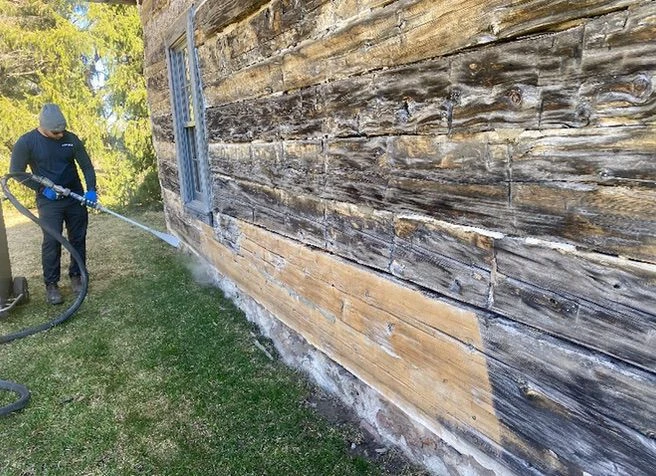
Downtime is expensive. The traditional approach, disassemble equipment, clean it, reassemble, can take a line out of service for hours or days. Dry ice blasting often lets us skip the teardown entirely.
How cleaning in place works
Dry ice pellets are soft compared to abrasive media, and they sublimate, turn straight from solid to gas, the instant they hit the surface. The rapid freeze and gas expansion pops grime, grease, carbon and residue off the substrate without abrading it, and because the pellet disappears on contact, there's no grit to chase out of bearings and no moisture near electrical components. That's what makes it safe to run on assembled equipment: motors, panels, conveyors, moulds and production lines can be cleaned where they stand.
Who benefits most
- Food & beverage processing: residue-free cleaning with no water and no chemical carryover on or near product-contact surfaces.
- Manufacturing: carbon, release agents and buildup off moulds, dies and conveyors during a shift window instead of a shutdown.
- Electrical & utilities: contamination off panels, switchgear and motors without introducing moisture.
- Fire restoration: soot and char off structure and equipment without driving water into already-damaged material.
When it pays for itself
For many facilities the service is cheaper than the downtime it replaces: maintenance happens during a short scheduled window instead of a full shutdown, and there's no secondary waste, no spent media, no wash water, to collect and dispose of afterward. If recurring buildup is forcing teardown cleans, it's worth re-evaluating the method. Send us a photo of the equipment and the buildup, and we'll tell you honestly whether dry ice is the right fit or whether another method serves you better.